Early Years in Kingston upon Hull
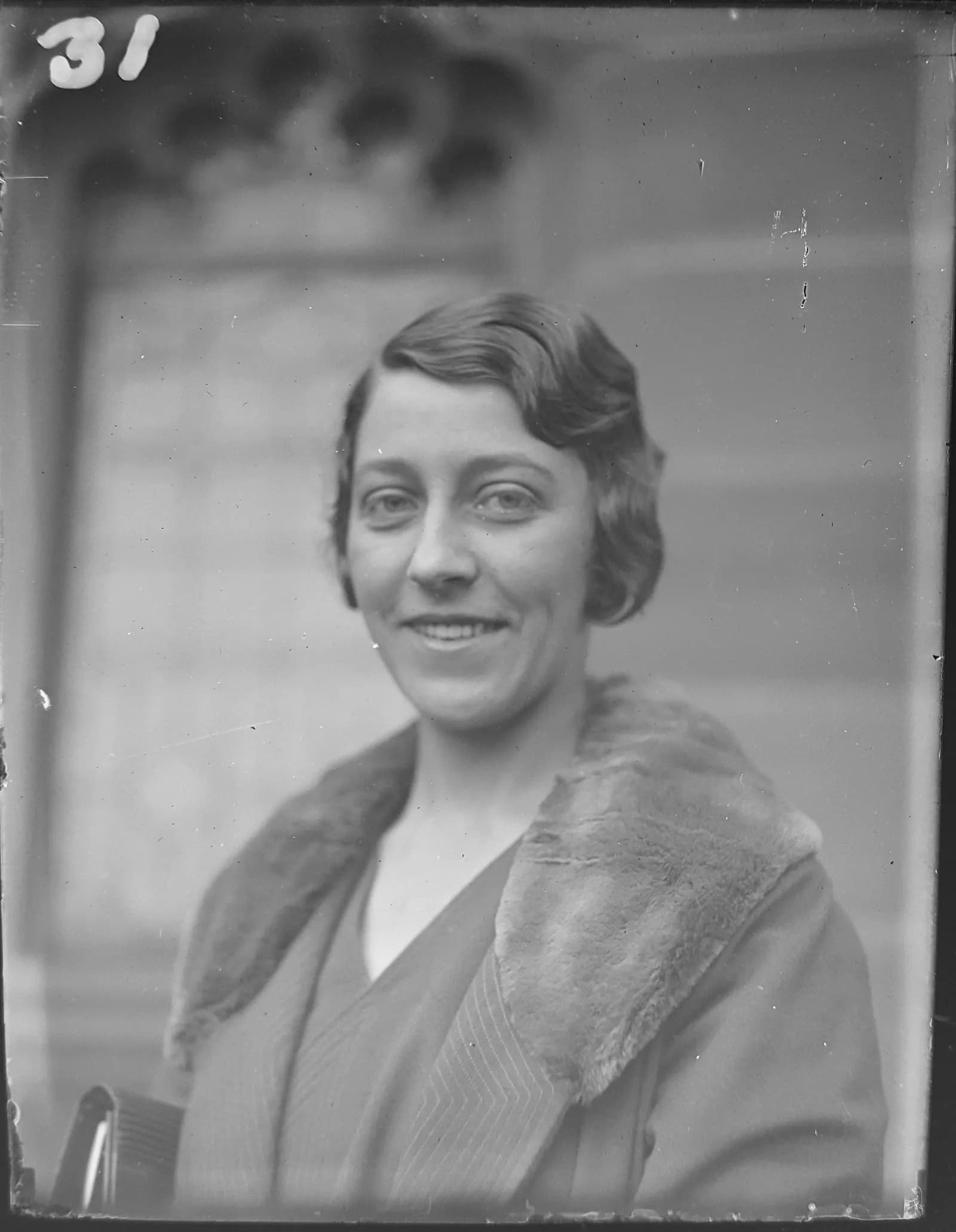
Amy Johnson was born on 1 July 1903 in Kingston upon Hull, the eldest of three sisters. Her mother, Amy Hodge, was the granddaughter of William Hodge, who served as Mayor of Hull. Her father, John William Johnson, was a partner in Andrew Johnson Knudtzon Fish Merchants, a firm that traded in the city's thriving maritime industry.
Johnson grew up in Hull and attended Boulevard Municipal Secondary School, which later became Kingston High School and is now the site of Sirius Academy West on Anlaby Park Road South. She graduated with a Bachelor of Arts degree in economics from the University of Sheffield before moving to London to work as a secretary to a solicitor.
Learning to Fly
Johnson discovered flying as a hobby at the London Aeroplane Club. She gained her aviator's certificate on 28 January 1929 and her pilot's "A" licence on 6 July 1929. That same year, she became the first British woman to obtain a ground engineer's "C" licence, demonstrating both her technical knowledge and her determination to succeed in a male-dominated field.
The Historic Flight to Australia
On 5 May 1930, Johnson left Croydon Airport in Surrey aboard a de Havilland DH.60 Gipsy Moth biplane. She had purchased the aircraft, registration G-AAAH, with financial assistance from her father and Lord Wakefield. Johnson named the plane Jason, after her father's business trademark.
Nineteen days later, on 24 May 1930, she landed at Darwin in the Northern Territory. She had covered approximately 11,000 miles (18,000 km) and became the first woman to fly solo from London to Australia. The achievement brought her international fame, the Harmon Trophy, and a CBE in King George V's 1930 Birthday Honours. The aircraft, Jason, is now on permanent display in the Flight Gallery at the Science Museum in London.
Record-Breaking Career
Johnson continued to set aviation records throughout the 1930s. In July 1931, she and co-pilot Jack Humphreys became the first to fly from London to Moscow in a single day, covering 1,760 miles in 21 hours. They continued to Tokyo, setting a Britain-to-Japan record. In July 1932, she set a solo record for the London-to-Cape Town route, breaking the existing record held by her husband, Scottish pilot Jim Mollison, whom she had married that same month. The couple divorced in 1938.
Other achievements included a Britain-to-India record in 1934 and regaining the Britain-to-South Africa record on 4 May 1936. She was awarded the Gold Medal of the Royal Aero Club in 1936.
War Service and Disappearance
In May 1940, Johnson joined the Air Transport Auxiliary, rising to the rank of first officer under Pauline Gower. On 5 January 1941, she was flying an Airspeed Oxford from Prestwick to RAF Kidlington when she disappeared in adverse weather conditions. It is believed she ran out of fuel. A parachute was seen, and a voice was heard calling for help from the water. Lieutenant Commander Walter Fletcher of HMS Haslemere dived in to rescue her but was unsuccessful; he died days later from exposure to the cold. Johnson's body was never recovered. She is commemorated at the Air Forces Memorial at Runnymede.
Hull's Enduring Tribute
Hull has honoured its pioneering aviator with multiple memorials. In 1974, a statue by Harry Ibbetson was unveiled in Prospect Street in the city centre. A second statue was unveiled on 30 September 2016 near Hawthorne Avenue, close to her childhood home and the site of the school that bore her name. Actress Maureen Lipman performed the unveiling ceremony.
Amy Johnson Primary School stood on the site until its demolition in 2004; the area has since been redeveloped as "The Hawthornes @ Amy Johnson" housing. A commemorative green plaque marks her connection to The Avenues area of the city. Sewerby Hall, near Bridlington, houses the Museum of East Yorkshire, which includes a room dedicated to Johnson. Her father donated a collection of Amy Johnson souvenirs to the museum in 1958. Johnson herself had opened Sewerby Hall and its park to the public on 1 June 1936.
More recent commemorations include a full-size model of the Gipsy Moth, built by Hull Prison inmates, which has been displayed at Hull Paragon Interchange since February 2017. The Amy Johnson Arts Trust, a Hull-based charity, champions her legacy through creative arts and educational programmes. In 2016, the trust marked the 75th anniversary of her death with a Festival of Arts and Engineering and the "A Moth for Amy" public art project, which placed artist-designed giant moths around Hull and East Yorkshire.